01
Build a focused prototype
Select an open-source arm design, print parts, assemble the hardware, and validate basic desktop tasks.
Lab & product
Matha Labs starts with datasets for human life activities from the first-person view. We’re working toward ten focused collections, then a broader library with evaluated models for developers and HumanHUD. HumanCapture is our planned contribution app; robotics concepts are preserved here as much later research.
In development / A Matha Labs product
HumanHud.ai
We’re building HumanHud.ai to transcribe a person’s daily life through compatible glasses into a calendar and transcript that AI agents can use. Our integration direction includes agents such as Meta Muse, Hermes, OpenClaw, and OpenAI Dot; these integrations are planned.
Where we’re taking it
Our first ten datasets focus on everyday activities from the first-person view, such as cooking, exercise, reading documents, and computer work. HumanHud.ai is intended to turn that activity context into a useful personal record. HumanCapture is our planned app for paid, opt-in glasses-POV capture and annotation; evaluated models and developer APIs connect the shared library to future applications.
Use a compatible first-person view, sound, and activity context to understand the moments of daily life.
Organize what happened into a calendar and transcript, so useful moments can be found again.
Build toward permissioned access to a person’s calendar and transcript so connected AI agents can help with relevant context.
Platform capabilities
Capture capabilities vary by device. The current Meta Ray-Ban Display web interface is display and D-pad only; it does not have camera or microphone access. Activity capture requires a compatible platform or companion camera, and those integrations are in development.
Later research / Robot interaction SDK
A robot interaction SDK is a possible later extension of HumanHUD, after our first-person dataset work. The concept would make a compatible robot’s intended task visible, let the person guide permitted actions, and connect that interaction to useful training examples.
Choose a visible, compatible robot the person has permission to operate.
See the intended task and the actions available for that integration.
Use hand gestures to issue permitted commands through the glasses.
With participation, pair the first-person view and instruction with the robot’s outcome.
Robot SDK and integrations are later research with no scheduled release.
01 / Datasets & models
We’re building a library of AI models and datasets that categorize what people do. The same intelligence will power HumanHUD and be available to developers through APIs.
HumanHUD brings activity intelligence to AR glasses. Our planned APIs will give developers access to the same model library for their own applications.
Later research / Robotics
Our current focus is first-person datasets for human life activities. Robotics is a longer-term direction. This interactive illustration preserves our exploration of how useful activity understanding could eventually support machines that assist people.
Much later / Preserved research concept
This desk-mounted robot arm concept is preserved for much later research, after our first-person dataset work. An open-source, 3D-printable design and a fixed workspace could offer a focused setting for studying human demonstrations, permitted commands, and observed outcomes.
Later research · Unscheduled · No completed hardware prototype claimed
01
Select an open-source arm design, print parts, assemble the hardware, and validate basic desktop tasks.
02
Prototype robot selection, visible task intent, and permitted hand-gesture commands through a compatible integration.
03
Pair demonstrations and robot outcomes, then develop simulated variations for custom enterprise datasets.
Possible later research sequence
The earlier procurement study considers a desk-mounted leader–follower pair, camera, and existing host computer. It remains a reference for later research, not an active purchase plan; no hardware has been purchased for this prototype.
Much later / Preserved research concepts
Mobile assistance and a physical home for robots remain early, unscheduled concepts. We preserve these studies while focusing on first-person datasets; hardware compatibility, operation, and performance still need separate validation.
Explore a smaller mobile robot with an arm for selected cleaning and property tasks, guided by activity context, permitted commands, and clear operating limits.
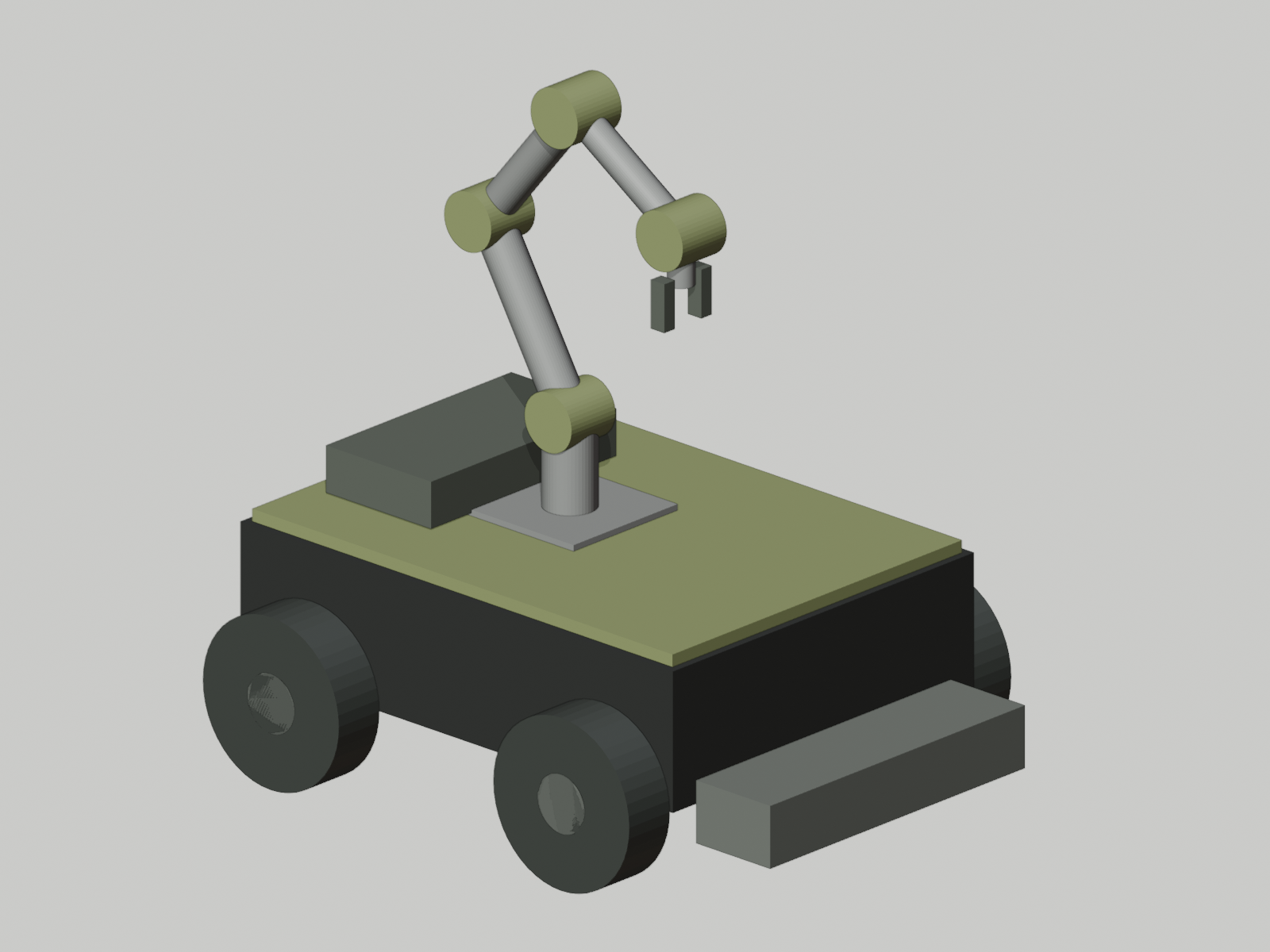 Review the dimensioned drawing (PDF)
A planned property-based dock with charging and tool storage for a compatible humanoid or smaller mobile arm. The concept gives the robot a place to return, prepare, and wait between tasks.
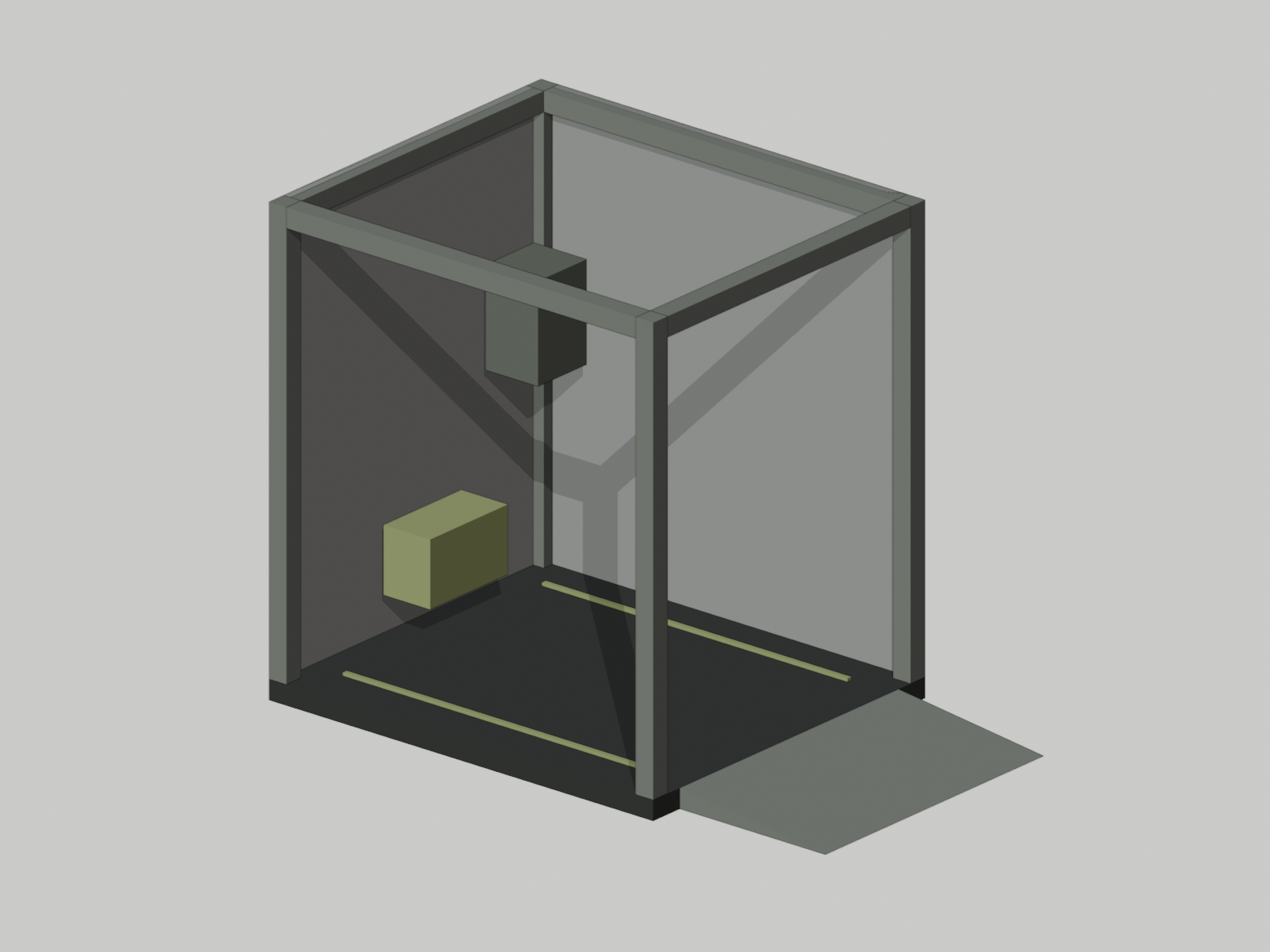 Review the dimensioned drawing (PDF)
Includes Blender and OpenSCAD source, full-scale and 1:10 concept STL files, dimensioned drawings, and recorded parameters.
Revision A engineering concepts establish packaging and access. Mounting, structural loads, electrical and charging design, weather resistance, and powered operation remain unvalidated.
Later research / Preserved design study
First-person datasets are our current focus. The wearable backpack and other robotics concepts remain much later research; earlier design studies are preserved below.
A Matha Labs product concept
Robotic Backpack
A wearable backpack with four robotic arms. We’re exploring AI that sees what you’re doing, understands the environment around you, and coordinates extra hands to help with the task at hand.
In development · Working concept
Explore this idea with us01
Observe the wearer’s actions, nearby objects, and the workspace to build a shared picture of the task.
02
Use the activity and surrounding context to identify where an extra hand could help.
03
Coordinate four backpack-mounted arms to hold, position, and bring objects within reach while you work.
Lab interests
01
Start with ten datasets about everyday activities such as eating, sleeping, cooking, and going to the gym. Combine documented sources, clearly identified synthetic examples, and planned opt-in capture.
02
How can egocentric models combine visual and audio cues to understand what a person is doing, what matters in the scene, and when help would be useful?
03
How can people express intent, guide local actions, and understand what Cloud AI is doing on their behalf through glasses and spatial interfaces?
04
Preserve the desktop arm, mobile robot, and wearable backpack concepts for later research. Human demonstrations could eventually inform physical assistance, after the dataset foundations and separate hardware validation.
Next step
Start with a free 15-minute introductory call with Revanth. We’ll discuss your training data needs or AI challenge and how Matha Labs can help.